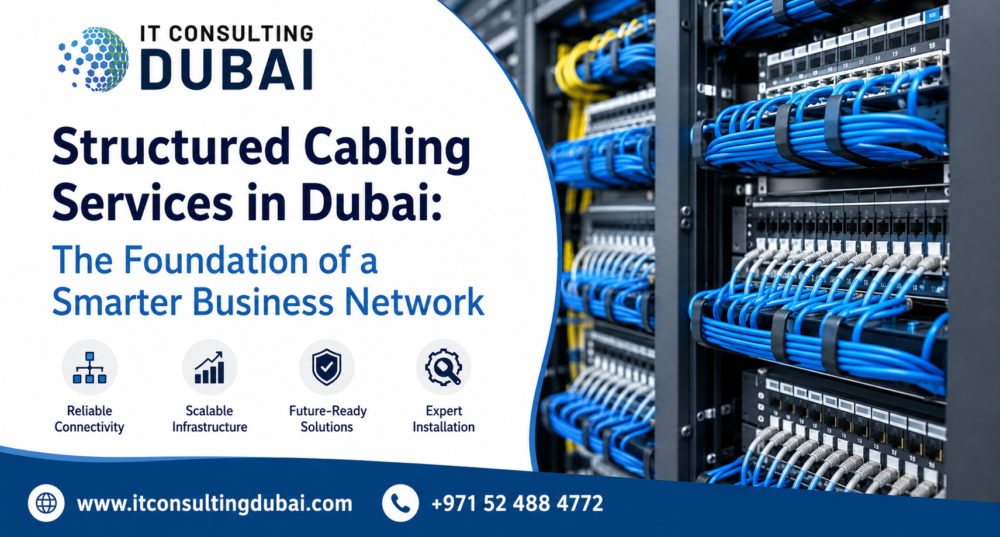
Structured Cabling Services in Dubai: The Foundation of a Smarter Business Network
An internet connection that is fast doesn’t guarantee a safe company network. Behind every video call or cloud-based application VoIP call and data transfer, Wi-Fi connectivity, a camera for security, and any other critical business application is a physical network that connects everything. This infrastructure begins with cabling.
Professionally developed structured cabling services in Dubai can be the basis of a network that’s efficient, reliable, flexible, and easy to handle. When you’re creating a brand new office or upgrading the existing infrastructure, extending the data center, or setting up a commercial space, choosing the correct cabling strategy could make all the impact on the performance of your network.
An expertly installed structured cabling system provides businesses with the ability to link computers, servers, switches, wireless access points, IP phones, security systems, and other networking equipment, allowing room for growth in the future.
What Is Structured Cabling?
Structured cabling can be described as a standard procedure for planning the installation and arranging the management of networks cabling across a building or installation.
Instead of adding cables in random order when a new device is implemented, a structured method establishes a system of organization that connects devices according to a defined design. This helps the network to comprehend and manage as well as grow.
The complete infrastructure for cabling includes horizontal cabling, backbone cabling, racks for network patches, outlets, patch panel cable management, labeling terminals, labeling, and testing.
If you are a business owner who is investing in structured cabling in Dubai, this method of organization can remove unnecessary cables in order to create a clean and more manageable network.
Copper or Fiber? Choosing the Right Cabling Technology
Each business will have its own unique demands for connectivity. The best cabling option depends on various factors, including the speed of your network, distance to transmission and equipment, layout of buildings, and needs for bandwidth, as well as the plans for expansion in the future.
The fiber optic cable and the copper are the two main technologies utilized to build modern networks.
Copper Cabling for Everyday Business Connectivity
Copper cabling is an effective option for a wide range of offices and commercial spaces. It’s a good choice to connect devices like computers, IP telephones, printers, and wireless access point switches, as well as other network devices over shorter and longer distances.
A structured cabling system that is professionally installed that utilizes copper may consist of:
Inter-Rack Cabling
Network racks typically contain multiple servers, switches, and various other gadgets. A properly designed inter-rack cabling system keeps connections organized and reduces excessive cable traffic.
Patch Panel Installation
Patch panels offer a central area for managing the network connection. By using appropriate labels and organization, the technicians are able to quickly recognize ports and then make adjustments as needed.
Cable Testing
Testing is a crucial component of any professional installation. Every connection must be inspected to find any flaws and to ensure that the cable is working as it should.
Outlet Termination
The proper termination of cables to network outlets can provide reliable and secure connections to users in the workplace.
Cable Tracing
In networks that have many connections, locating one cable is complicated. The use of cable tracing can help technicians locate connections with greater efficiency when they are in the process of troubleshooting, maintenance, or upgrade.
End-to-End Cable Labeling
The consistent labeling of networks makes managing them easy. IT personnel can easily identify cables as well as racks, ports, and outlets without trying to find the unlabelled cables.
Why Choose Copper Cabling?
It is extensively used due to the fact that it provides a convenient combination of flexibility, affordability, and easy installation. Copper can be a great choice in offices where equipment is situated within relatively small distances.
A well-planned copper infrastructure can be a reliable solution for daily communications requirements.
Fiber Optic Cabling for High-Speed Networks
With more businesses opting for cloud computing services and relying on applications that need data and applications, there will be a need for increased bandwidth. Enterprises, data centers, and data management firms may need to have stronger connections because of the increased amount of data they have to manage.
This is where fiber optic cables come in handy. The fiber sends data in electrical form and not light. This allows high-speed communication for long distances while also providing an extremely strong shield against electromagnetic interference.
The installation of fiber-structured cabling includes a variety of important steps.
Fiber Network Design
A fiber-optic network needs to be designed in accordance with the current needs of the facility as well as the anticipated needs of the future. The location of the equipment, the cable routes connecting points, and the network’s architecture must all be taken into consideration prior to installation.
ISP-to-Data Center Connectivity
Fiber is used to provide high-speed connectivity with the Internet Service Provider as well as a data center and support applications in which reliable and high-bandwidth connectivity is required.
Fiber Implementation and Termination
Installation of fibers is a delicate process that requires precise handling, termination, and proper tests. The proper installation will provide the expected performance from fiber technology.
Key Benefits of Fiber Cabling
Fiber cabling offers several advantages for demanding network environments:
• High-Speed Transmission: Allows for fast transfer of huge amounts of information.
• Long-distance connectivity is suitable to connect over longer distances.
• Low Electromagnetic Interference is less prone to electromagnetic interference compared to copper cabling.
• High Bandwidth: Made for high bandwidth applications and requirements.
• Future-ready infrastructure is a strong basis for businesses to plan to meet the growing demands of connectivity.
Why Structured Cabling Matters for Your Business
Selecting a professional’s structured network cabling in Dubai isn’t just about putting in cables that connect one place to the next. The infrastructure’s physical structure can impact the ease with which your network will be managed, upgraded, and kept in good condition.
Here are the most significant advantages.
1. A Cleaner and More Organized Network
The clutter of cables makes an IT room challenging to control. Structured cabling makes use of planned paths and racks as well as patch panels and labels to provide an organized space.
If everything is in a defined area, technicians will be able to perform their tasks faster and solve problems better.
2. Easier Network Expansion
Networks for business are always evolving. Computers, new employee servers, access points, cameras, and more technologies can be added to the network as it expands.
The scalable structure of structured cabling permits new connections to be added without having to rebuild the network infrastructure.
3. Greater Reliability
The quality of the cables is not enough. The correct selection of cables, route the termination process, installing and testing all play a role in an efficient network infrastructure.
Professional installation is a great way to minimize problems with connectivity via cables and offer greater reliability in network performance.
4. Faster Troubleshooting
Imagine hundreds of cables without labels or documents. The search for a broken cable could require hours. The structured cabling systems, the label of connections, and the proper cable routing ensure that the job of the IT personnel becomes easier in diagnosing any problems.
5. Simplified Maintenance
An efficient infrastructure provides technicians with an understanding of the way networks are organized. This makes regular maintenance, repair of equipment upgrades, and troubleshooting easier.
6. Better Long-Term Value
An unplanned cabling system will require frequent changes as your company expands. Making the investment in expert structured cabling services in Dubai at the start can help create an enduring foundation to meet future demands.
What Professional Structured Cabling Services Should Include
If choosing a cabling company that is structured, business owners should think beyond simple cable installation.
A comprehensive service must consider the whole network infrastructure that includes:
- • Assessment of the site and the infrastructure
- • Design and plan of networks
- • Selection of fiber and copper cable
- • Pathways and cable routing
- • Organization of equipment and racks
- • Patch panel installation
- • Termination of outlet
- • Cable labeling
- • Tests of cable
- • Testing and termination of fibers
- • Network documents
- • Future expansion requirements
It is the goal of creating an infrastructure that is efficient in the present while being adaptable enough to meet the demands of tomorrow.
Where Structured Cabling Can Be Used
The structured cabling can be used in many different environments, which include:
- • Corporate office
- • Data centers
- • Institutions of education
- • Healthcare facilities
- • Retail business
- • Warehouses
- • Industrial facilities
- • Hotels and other hospitality establishments
- • Commercial structures
- • Large residential developments
If you’re connecting offices with workstations or establishing high-speed connections inside the data center, the cable infrastructure must be planned to meet the specific needs for operation.
Structured Cabling for Growing Businesses
Imagine a company that is growing on an old network, where cables have become tangled, ports are not labeled properly, and each device will require a different improvised connector.
The business expanding the infrastructure is becoming more difficult.
An expertly designed structured cabling system can completely transform the environment. Cable pathways that are organized, correctly identified cables, patch rack management, and precise testing could create a network that is simpler to manage and grow.
For high-bandwidth and data center areas, the addition of fiber cabling will further enhance the infrastructure to support fast as well as long-distance data transmission.
Build a Network That Is Ready for Tomorrow
The network infrastructure you have shouldn’t become a hindrance when your company expands.
Professional structured cabling services in Dubai give businesses a well-organized physical base for secure connectivity, less troubleshooting, easier maintenance, and future expansion.
From copper-based cabling in office equipment to fiber-based solutions that allow for long-distance and high-speed communication, every component must be meticulously planned and installed, tested, identified, and recorded.
If you’re setting up an office in a new location or moving your company and upgrading your network or establishing a data center, expert structured cabling is a great way to develop an infrastructure that meets all of the requirements today as well as tomorrow’s technology.
A network that is smarter starts by building a better foundation. That base is cabling that has been structured.