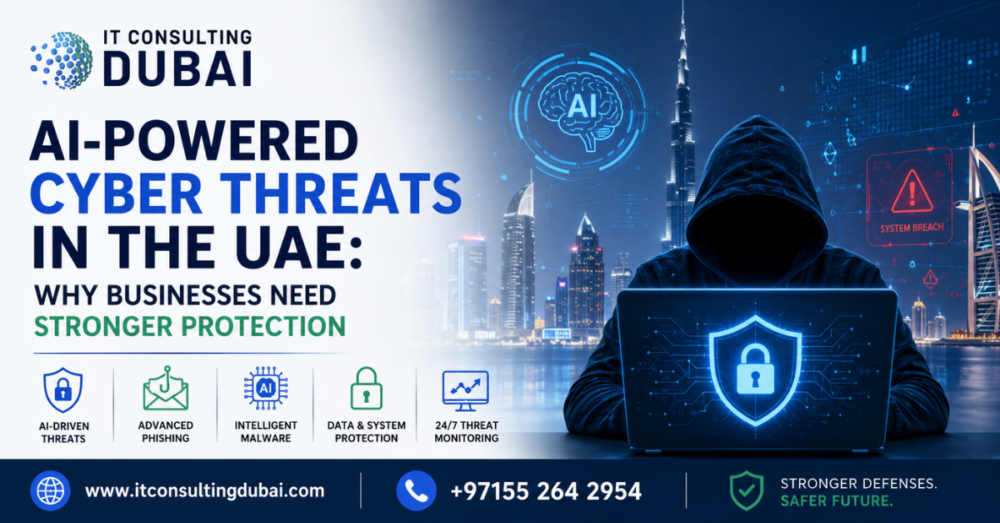
AI-Powered Cyber Threats in the UAE: Why Businesses Need Stronger Protection
Few places feel secure the way they once did, particularly for businesses in the UAE facing tougher online threats each passing month. These online risks shift faster than before, slipping through older defenses without much noise. Smarter attacks arrive daily, built to outthink standard safeguards. Firms find themselves reacting more, caught between speed and security. Hidden weaknesses get noticed by unseen actors who move quietly but with purpose. What once worked now falls short, unable to keep pace with evolving tricks. Each breach teaches something – often too late. Confidence fades when systems face unknowns they weren’t made for. Quiet tension builds behind office screens where data lives exposed.
With the UAE pushing hard into digital change, companies spot chances to grow while dealing with fresh risks online. Though tech moves fast here, unseen dangers pop up just as quickly alongside progress. With AI, organizations are no longer just being able to streamline processes and automate operations. Today, cybercriminals are exploiting AI to attack businesses, regardless of size, faster, smarter and more sophisticated than ever.
AI-driven cybercrime, which can evolve its tactics and methods in mere seconds through phishing emails, is a significant threat to businesses in the UAE. With the rise of industries using cloud platforms, remote work setups, Internet of Things devices and artificial intelligence technologies, the need for advanced cybersecurity solutions has never been greater.
Multiple reports in the past few months have pointed to how many digital assets are now exposed in the UAE and how cyber attackers are leveraging AI. Government entities come first, followed by banks shaped under strict rules. Financial firms appear next due to their data load. Healthcare providers join because of sensitive records they hold. Energy sector organizations matter just as much, tied deeply to infrastructure needs.
Understanding AI Risks Within Digital Defenses
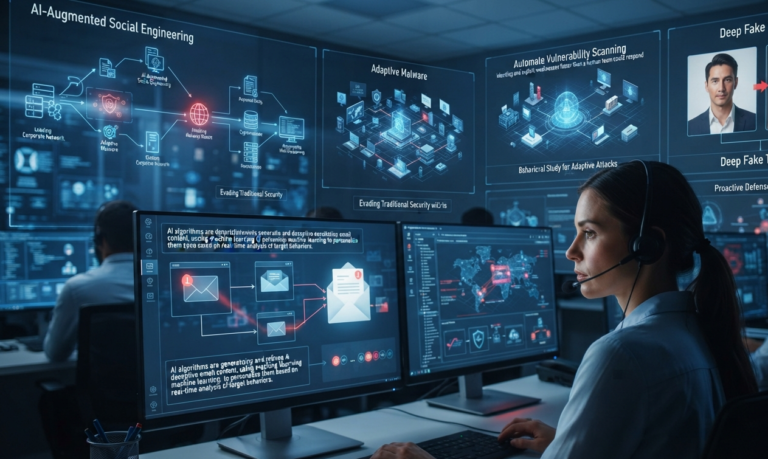
One way to begin is by examining risks linked to artificial intelligence within digital defenses. Awareness of how attackers employ machine learning shifts understanding toward proactive measures instead.
Cyberattacks typically involve humans or repetitive scripts or patterns. Unlike traditional attacks, AI-based attacks can learn, adapt and automate malicious activities at scale.
Today, cybercriminals are leveraging artificial intelligence in the following ways:
- • Make highly believable phishing e-mails
- • Generate fake voices and deep fake videos
- • Automate vulnerability scanning
- • Go around conventional security measures
- • Run adaptive malware attacks
- • Be able to study how users act in these types of attacks and how to react accordingly
- • Organize clever credential theft operations
- • Plan out smart credential theft operations
By leveraging AI, attackers can work faster and smarter. This makes it much harder to find threats with traditional security technologies.
AI-powered fraud and phishing attacks are on the increase, eliminating the need for typical warning phrases like “please ignore this message” or “don’t respond to this email,” warns the UAE Cyber Security Council.
Why the UAE Is Becoming a Big Target
UAE is among the top digital economy countries in the Middle East. From Dubai to Abu Dhabi, Sharjah and beyond, businesses are increasingly investing in cloud computing, fintech, smart infrastructure, AI technologies and even digital government services.
These innovations are for the benefit of economic growth, but they also expand the cyberattack surface. The more systems are interconnected, the greater the possibilities for vulnerabilities to be exploited by cybercriminals.
The UAE is an appealing target for cyber-attacks, for several reasons:
Rapid Digital Transformation
More and more businesses are increasingly transiting their processes to the digital realm. This increases the number of endpoints, cloud environments and devices to protect.
High-Value Industries
The UAE has some of the most important industries including banking, aviation, oil and gas, healthcare, logistics and government services. Information about financial matters and daily activities in these areas attracts those who seek to exploit it. Though distinct disciplines, both store information attractive to those seeking harm.
Remote and Hybrid Work Environments
Where desks once stood, screens now glow in scattered homes. Though offices centralized access before, entry spreads across networks today. Because distance matters less, links build in unexpected corners. Even quiet villages host logins that bypass old limits. With every device comes risk, as protection thins across locations.
Growing Use of Artificial Intelligence
As businesses embrace AI-driven systems, hackers are also leveraging AI to enhance their attacks. Just like any other technology, AI is being used by hackers as well to improve their attacks. Attacks that are now powered by AI are now better able to mimic people and evade detection.
Thousands of attempted intrusions and state sponsored cyber operations against digital infrastructure have been reported by cyber security experts in UAE on a daily basis.
Common AI-Powered Cyber Threats Businesses Face
AI-Generated Phishing Attacks
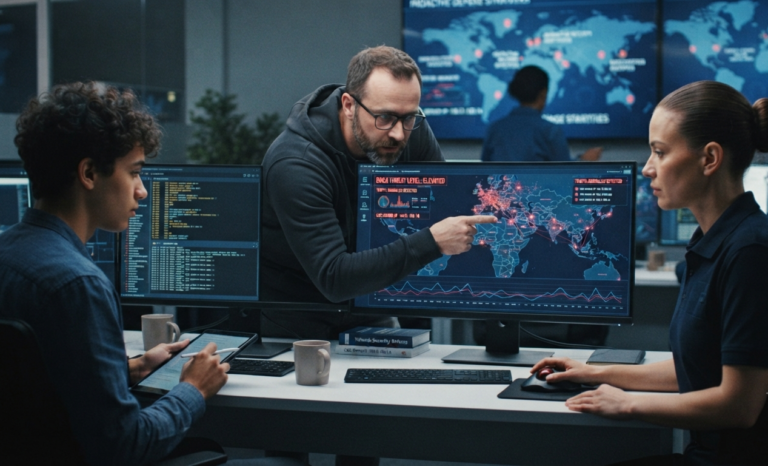
Despite being one of the most effective attack methods, phishing has become even more dangerous with the introduction of AI. Now, attackers are able to craft custom and grammatically correct phishing messages in seconds instead of hours.
These emails frequently appear to be from reputable companies, vendors or management, and are very difficult to identify as malicious by the employee.
Deepfake Fraud
Voice cloning and video manipulation tools are becoming a common choice for impersonation attacks, as they are the result of AI. Cybercriminals can pretend to be executives or financial officers of the company, duping employees into transferring money or disclosing personal information.
Intelligent Malware
The modern malware with AI technology can study security measures, modify its behavior and bypass security systems. In some cases, the malware variants can even figure out what time it’s best to attack, depending on how active the user is.
Automated Password Attacks
When systems lack strong verification steps, access risks rise sharply. Automated programs examine exposed account details, then attempt entry across multiple services without delay. When code lacks strength, risk grows. Institutions then face intrusion through unseen openings. Still exposed, weaknesses wait silently while access slips away unseen. Without guard, openings linger – authority shifts when least expected.
AI-Driven Ransomware
Nowadays, precision guides ransomware toward its system targets.
Precision defines its current approach. With sharper methods, it reaches specific goals. Focus shapes each move it makes. Its actions show careful planning. Greater detail marks every operation. Specific outcomes guide its path.
Because of artificial intelligence, those behind attacks identify essential systems before striking. What gets targeted often depends on potential impact. Valuable data draws attention through pattern analysis. Disruption strategies emerge from calculated assessments. Only after these steps does the payment request follow.
Financial and Operational Impact
Cyberattacks are not just targeted at IT systems. These can have a serious impact on the continuity of business, reputation and financial losses.
AI-driven cyber threats can have several impacts, such as:
- • Information loss and stealing information
- • Operational downtime
- • Financial fraud
- • Regulatory penalties
- • A loss of trust among customers is a major risk
- • Supply chain disruptions
- • Intellectual property theft
A break in operations might linger as a lasting setback for companies facing rivals across the UAE. Even brief pauses tend to echo forward when competition runs high.
How Businesses Can Enhance Their Cybersecurity Efforts
Staying ahead means adapting before attacks happen, not just reacting afterward. New dangers pop up constantly, so old methods fall short these days. Smarter defenses now beat yesterday’s routines every time. Watching closely beats waiting around for alarms to sound. Thinking steps ahead reshapes how safety works across teams.
Advanced Threat Detection Installed
When odd actions pop up online, today’s security tools notice them fast because they learn patterns over time. These systems watch every move as it happens, adjusting quietly when something feels off. Instead of waiting, they act – guided by smart algorithms that spot differences before harm spreads.
Use Multi-Factor Authentication
Multi-factor authentication is a type of authentication that provides extra security beyond a password. Although a credential might be stolen, if there is a second credential, the attacker cannot easily gain access to a system.
Hold Regular Security Awareness Training
One of the most critical components of cyber security’s defense is employees. Staff receive regular training regarding phishing, suspicious links and social engineering.
Strengthen Endpoint Security
Each of the devices that is connected is a possible access point for the attacker. Endpoint protection solutions are used to ensure the security of laptops, desktops, mobile devices and remote workstations from malware and unauthorized access.
Implement Security Monitoring Solutions and SIEM
Out there where digital traffic flows, visibility matters most. When alerts pop up across devices, one clear view ties it together. Instead of chasing fragments, teams get context fast. Because insight spreads further when pieces connect. Reaction times shrink once detection sharpens. From start to response, timing shifts. Hidden patterns emerge under steady observation. With signals linked, confusion fades.
Managed Detection and Response Services
Staying ahead of cyber dangers means using fresh threat data, constant watchfulness, one reaction after another when things go wrong. These services mix live insights with sharp eyes on networks, followed by fast moves if trouble shows up. New risks emerge every day, so responses must shift just as quickly, layering knowledge with action right away. Each move ties back to what is happening now, not guesses about the future. Speed matters because delays cost time, effort, attention.
How AI Stops Cyber Attacks
Without warning, systems begin identifying online threats more quickly than people. Suddenly, algorithms detect risks before human eyes can react.
Still, they sometimes miss what seems obvious. On the flip side, when trained well, these tools detect strange patterns before harm spreads. Even so, relying too much can backfire just as quickly. Yet teams using them wisely often stay ahead of attacks others overlook.
When companies across the UAE seek stronger digital safeguards, IT Consulting Dubai increasingly becomes their chosen partner—delivering advanced tools alongside clear strategic guidance. With artificial intelligence shaping modern risks, the firm supports enterprises in reinforcing defenses: protecting cloud systems, strengthening device-level security, and observing unusual network behavior. Because threats evolve rapidly – demanding quicker detection and deeper insight – a reliable approach proves essential. Stability in operations depends on it. So, safeguarding critical information and reducing exposure to expensive interruptions.