Beware the Next Generation of Phishing Attacks: Why Businesses Need Stronger Cyber Defenses
Not long ago, phishing meant clumsy fakes – messages riddled with errors, clearly fishing for passwords. Now, deception hides in plain sight, shaped by smart algorithms that mimic real communication almost perfectly. Driven forward through layers of behavioral insight, modern attempts blend into daily workflows without raising alarms. Where systems connect faster, vulnerabilities spread wider, often unnoticed until it is too late. Complexity grows alongside progress, opening doors once thought secure.
Among firms active in rapidly expanding regions such as the UAE, safeguarding digital systems has shifted from choice to necessity. Security now stands embedded within essential operations. Within this context, guidance provided by technology advisors in Dubai becomes vital – shaping resilient frameworks, limiting vulnerabilities, while anticipating evolving forms of deception targeting user trust, strengthened further through IT Consulting Dubai expertise and advanced Cyber Defences solutions Dubai.
The Evolution of Phishing Attacks
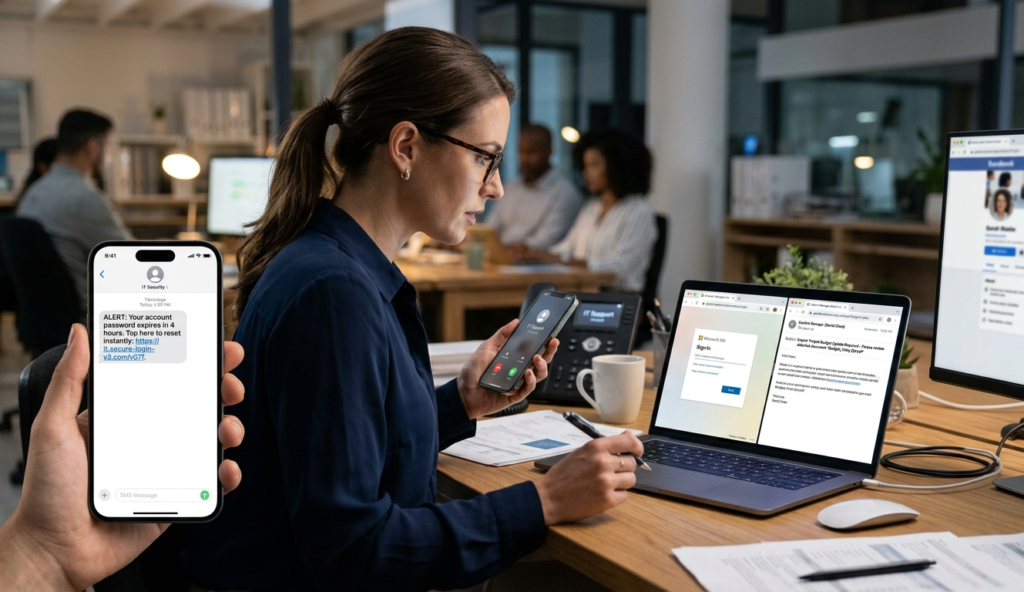
Back then, spotting a fake email could be simple. Mistakes in grammar showed up often, alongside odd web addresses or demands that made little sense. Now, though, messages come shaped precisely, customised tightly to mimic real communication.
Modern phishing includes:
- • AI-generated emails that mimic human tone perfectly
- • Fake login pages that replicate real corporate portals
- • Voice Phishing with Artificial Intelligence Cloned Voices
- • SMS based phishing targeting mobile users
- • Business email compromise attacks
- • Social media impersonation campaigns
Engineered methods aim to avoid raising doubt in people, along with certain automated defenses. Though built for stealth, they rely on subtle cues rather than force. Their success often depends on timing, not complexity. Appearing ordinary becomes their strongest trait. Not every digital safeguard catches them immediately. What seems harmless may carry hidden intent behind familiar formats.
Most concerning about these attacks lies in how personalised they are. Information pulled from social media, corporate sites, or leaked databases allows criminals to craft messages that feel real.
Phishing Attacks Are Rising
Several factors are driving the rise in phishing threats:
- • Increased remote and hybrid work environments
- • Greater dependence on cloud-based systems
- • Rapid digital transformation across industries
- • Expanding use of mobile devices for business tasks
- • Large-scale data breaches exposing personal information
- • Automation tools available to cybercriminals
With greater organizational connectivity, possible access routes grow. This expands chances for intrusions through existing gaps. Entry options rise alongside network complexity.
The Real Business Impact of Phishing
Business functions face disruption when phishing strikes, not merely IT systems. Reputational damage follows closely behind operational setbacks. Financial security often weakens as a result of these intrusions. Stability within organizations shifts under such pressure.
If you fall for a phishing scam, you may have:
- • Unauthorized access to sensitive systems
- • Financial theft/fraudulent transaction
- • Breach of Data with Customer information
- • Loss of intellectual property
- • Operational downtime
- • Regulatory penalties
- • Damage to brand reputation
Often, dollar losses grow well past the first incident – rebuilding systems, facing lawsuits, and fading loyalty each add pressure. Yet the numbers keep rising long after headlines fade.
A single incident may linger far beyond its moment, shaping how firms are viewed across Dubai’s crowded sectors. Perception shifts quietly yet persistently affect standing among customers and partners alike.
Modern Phishing Attacks Explained
Phishing attempts of recent design slip quietly into everyday messaging paths. Rather than standing out, they mirror familiar tones – voices copied from leaders, suppliers, even help desks. A message may arrive shaped like routine contact, yet carry hidden intent. Impersonation forms the core tactic, mimicking authority through subtle imitation. These messages do not shout; they whisper within expected patterns. Trust becomes the entry point, exploited without spectacle.
Common techniques include:
- • Domain spoofing using similar-looking email addresses
- • Fake urgent requests to bypass employee judgment
- • Hidden connections point toward replicated web pages
- • Malware hidden in attachments
- • QR code phishing (quishing)
- • Multi-stage attacks combining email and messaging platforms
Pressure, dread, or duty – these are what manipulators lean on most. Not reason, but feelings push people into quick choices they might later regret. Verification tends to be skipped when pressure appears legitimate. A fabricated sense of authority may shape user response more than facts. Quick reactions replace careful checks under such influence.
Human Error Still the Biggest Vulnerability
Even with strong defenses, actions by people often open the door to phishing. Workers might click without realizing it. Mistakes happen when attention slips. A single misstep can allow access. Behavior patterns matter more than software at times. Unclear messages increase risk. Trust is sometimes misplaced. What seems harmless may carry hidden harm.
- • Click harmful web addresses
- • Share login credentials
- • Download infected attachments
- • Approve fraudulent transactions
- • Ignore security warnings
Still, experienced personnel may falter if threats feel personal, almost familiar. A sense of realism in deception shifts judgment subtly. When messages mirror trust, caution slips quietly.
For this reason, instruction on recognizing digital threats holds equal weight to protective software systems.
Stronger Defense Through IT Consulting Skills
With growing frequency, companies turn to expert IT consulting in Dubai when designing security approaches more complex than simple virus detection. Though standard tools remain common, deeper safeguards now take priority through specialized guidance. Layered defenses emerge not by accident but via deliberate planning shaped by insight into modern threats.
Effective consulting support includes:
- • Security risk assessments
- • Email filtering and threat detection systems
- • Multi-factor authentication (MFA) implementation
- • Endpoint protection strategies
- • Network monitoring and intrusion detection
- • Employee cybersecurity training programs
- • Incident response planning
A well-built defense never depends solely on one measure. Rather, through coordination of tools, procedures, and informed individuals, vulnerabilities see meaningful reduction.
The Role of AI In Attacks And Defense
Though machines help hackers design deceptive emails, defenses apply similar logic to spot odd patterns. Yet tools meant for harm also serve protection in different hands. Where one side builds tricks, the other grows alerts from the same technology. Machines learning deception can equally learn suspicion. Even smart attacks meet smarter checks when mirrored techniques rise. What fuels fraud may just fortify filters instead. Meanwhile, machine-driven solutions observe network traffic, recognizing odd sequences prior to damage unfolding.
AI-driven security solutions can:
- • Analyze email patterns for anomalies
- • Detect unusual login behavior
- • Identify fake websites in real time
- • Block malicious links before they are clicked
- • Automate threat response actions
Still, relying only on AI falls short. When paired with clear oversight, staff vigilance follows naturally. Over time, consistent tracking becomes necessary alongside these elements.
Dubai Companies Act Early
Among global hubs, Dubai sees sharp digital expansion – this attracts unwanted attention from online attackers. Firms in banking, medical services, stores, shipping, or tech face rising risks of deceptive email schemes – not because systems lack tools, but due to constant adaptation by threat actors. Still, even with safeguards, people often slip up. What keeps systems safe isn’t just code – it’s staying alert, day after day.
Delaying cybersecurity upgrades can lead to:
- • Higher vulnerability to attacks
- • Increased compliance risks
- • Greater financial exposure
- • Operational disruptions
- • Loss of customer trust
Besides cutting future expenses, preparing ahead reduces the impact of digital threats. Instead of reacting too late, early safeguards limit damage potential.
Creating A Security Plan That Works Now and Later
Remaining alert to shifting phishing risks requires a forward-looking approach to cyber defense. A change in attitude becomes necessary when new dangers appear unexpectedly. Facing these challenges begins with awareness before tools or tactics arrive. Prevention grows more relevant once past reactions prove too slow. Shifting focus toward readiness alters how teams respond later. Insight emerges not after breaches happen, but long before they occur.
Key steps include:
- • Regular security audits
- • Continuous employee training
- • Secure cloud configuration
- • Strong identity and access management
- • Real-time threat monitoring
- • Backup and recovery planning
Backed by seasoned IT advisors, companies may develop flexible, durable systems capable of adjusting when fresh risks appear. While guidance exists, structure evolves only if designed to withstand change over time. Resilience emerges not from tools alone, but through continuous alignment with shifting conditions ahead.
Next-Generation Phishing Attacks and Modern Cyber Defense Strategies
With phishing growing sharper, precision-focused, leaving fewer traces. When attackers embrace modern tools, defenses need matching depth just as quietly.
Outdated approaches fail to meet current threats. Without careful strategy, new technologies, or skilled oversight, safeguarding information becomes increasingly difficult. Protection now depends on updated frameworks, deliberate design, followed by consistent review.
Because expert guidance exists in Dubai, company defenses improve against digital threats through phishing attacks solutions in Dubai.When systems adapt steadily, fewer vulnerabilities remain open to exploit. Facing new forms of phishing becomes manageable through informed adjustments over time. Confidence grows where knowledge replaces uncertainty.