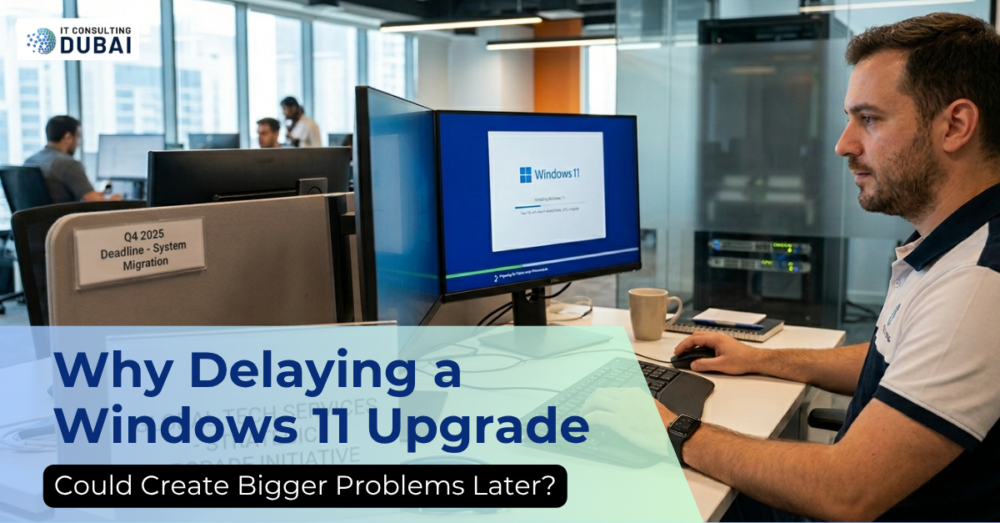
Why Delaying a Windows 11 Upgrade Could Create Bigger Problems Later? : IT Consulting Dubai
Despite functional performance, reliance on Windows 10 persists across firms where user comfort and perceived upgrade costs delay change. As support timelines near, uncertainty grows – not about immediate breakdowns, but long-term viability under outdated infrastructure. Temporary patches may extend operation; however, strategic shifts loom inevitable when continuity depends on unsupported software.
On the outside, delaying migration might appear sensible. While workflows remain unchanged, known tools are retained, also stability is preserved temporarily. Yet staying too long on aging systems tends to build hidden vulnerabilities. These issues grow steadily without clear warning signs. Gradually, protection weakens, integration falters almost unnoticed, then performance erodes below detectable levels until serious consequences emerge.
When stability matters in infrastructure planning, firms turn to IT consulting providers in Dubai – not only for assessing system upgrades but also spotting hidden risks. Should systems be ready, their evaluation follows close behind, shaped by how existing solutions match shifting demands. Guarding data flows into standard reviews instead of standing apart. Choices rest on lasting operation no less than prompt results. Many organizations now depend on IT Consulting Dubai services to maintain operational continuity while preparing for future system demands.
After October 2025, Microsoft ceased support for Windows 10 entirely. Entities continuing its use may turn to external vendors for assistance rather than official channels. Payment-supported patch programs could become a necessary alternative under these conditions. Protection could persist through external maintenance efforts following that point.
Windows 10 Extended Support Explained
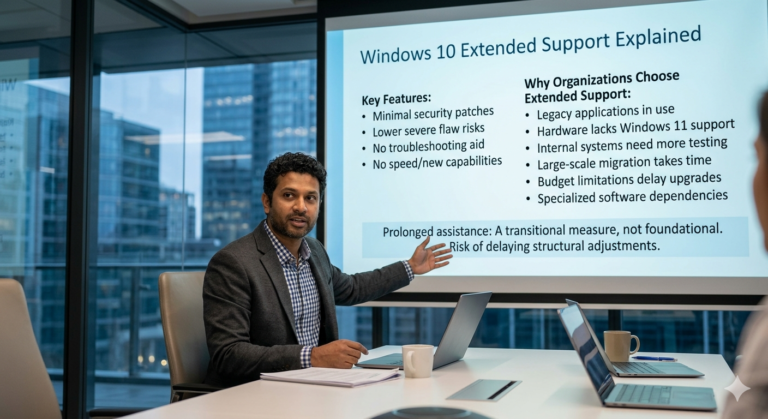
Long-term support options continue offering minimal security patches once standard OS maintenance ends. While such fixes aim to lower risks from severe flaws, full troubleshooting aid remains unavailable alongside speed upgrades or new capabilities. Remaining protection does not include comprehensive service expansions beyond targeted threat responses.
Organizations often choose extended support because:
- • Legacy applications remain in use
- • Hardware may not support Windows 11
- • Internal systems require additional testing
- • Large-scale migration takes time
- • Budget limitations delay upgrades
- • Specialized software depends on older environments
While prolonged assistance may ease immediate pressures, experts across sectors often note its role must remain transitional instead of foundational. Yet reliance on such measure’s risks delaying necessary structural adjustments long term.
Security Risks Grow Slowly Without Notice
Should security updates stop, older systems tend to draw unwanted attention. Though hardware may still operate properly, lapses in software maintenance open doors – especially as time passes.
Security risks commonly include:
- • Ransomware attacks
- • Data breaches
- • Malware infections
- • Exploitation of unpatched vulnerabilities
- • Unauthorized system access
- • Credential theft
- • Phishing-based compromise
Left unpatched, system flaws persist across time. Although some essential fixes fall within prolonged assistance efforts, complete resolution of all problems is rarely achieved. Periods without protection grow when maintenance ends. Even with added coverage phases, not every fault receives attention during those stages.
Should outdated systems remain in use, exposure within company operations could grow. Experts observing tech trends suggest dependency without support widens vulnerabilities over time. As safeguards fade, weaknesses might spread silently through connected environments. Unpatched platforms tend to attract increasing attention from those seeking entry points. Over months, minor flaws may evolve into major access routes. Infrastructure once stable now faces pressure from unseen digital threats. Long-term reliance often leads to fragile networks. Protection weakens when updates stop arriving. Systems cut off from maintenance become harder to defend.
Compatibility Issues Show Up Over Time
Initially, legacy platforms seem completely reliable. Work continues smoothly, programs launch as expected, yet subtle mismatches start appearing after extended use. Eventually, these small conflicts grow harder to ignore.
Eventually, companies might face challenges such as:
- • Software no longer receiving updates
- • Driver incompatibilities
- • Less assistance now comes from suppliers
- • Cloud platform integration issues
- • Hardware limitations
- • Performance instability
- • Problems with newer cybersecurity tools
Over time, some software creators shift focus toward recent platforms, causing earlier setups to lose features or struggle with connections. Gradual performance drops tend to affect operations long before teams identify the real issue.
Later challenges often emerge when companies postpone updates, since aging systems gradually move beyond official support boundaries. A growing gap tends to complicate future adaptations more than expected. Technical environments shift steadily, leaving outdated setups less compatible over time. Delayed maintenance rarely simplifies long-term efforts – instead, it introduces layers of complexity. Upgrades deferred today can become disruptive adjustments tomorrow.
Financial Costs Tend to Increase Over Time
Postponing updates may lower upfront spending for certain businesses. However, putting off system changes often leads to higher running expenses later.
Businesses may eventually face:
- • Additional expenses emerge as support durations lengthen
- • Emergency hardware replacements
- • Downtime during security incidents
- • Increased maintenance expenses
- • Compliance penalties
- • Productivity disruption
- • Higher recovery costs after attacks
Eventually, findings spanning various enterprise tech fields indicate that worldwide expenditure on prolonged support may climb into the billions. This shift unfolds as institutions hold back on moving systems. Delays persist amid evolving operational demands. Spending grows despite awareness of long-term risks. Observations reflect a pattern not easily reversed. Financial commitments accumulate without clear exit paths.
Though immediate cost reductions seem beneficial at first, extended reliance on outdated infrastructure tends to generate concealed burdens over time. Eventually, these unnoticed charges build up silently within daily workflows.
Hardware Readiness Still a Big Challenge
Despite wanting updates, some companies delay due to device limitations tied to Windows 11. Systems built earlier often fall short on Microsoft’s safety chip rules, processing power needs, or trusted platform module criteria.
Among these issues arise various challenges for operations:
- • Device replacement planning
- • Budget allocation
- • Employee workflow interruption
- • Legacy software compatibility
- • Operational downtime risks
Older hardware setups still anchor certain industry-specific tools. In manufacturing and related fields, reliance on obsolete operating systems creates persistent hurdles. When vital programs cannot move forward, operations stall unexpectedly. Conversations among IT experts often circle back to such roadblocks.
Even with such obstacles present, putting off readiness measures tends to squeeze later relocation schedules into abrupt transitions.
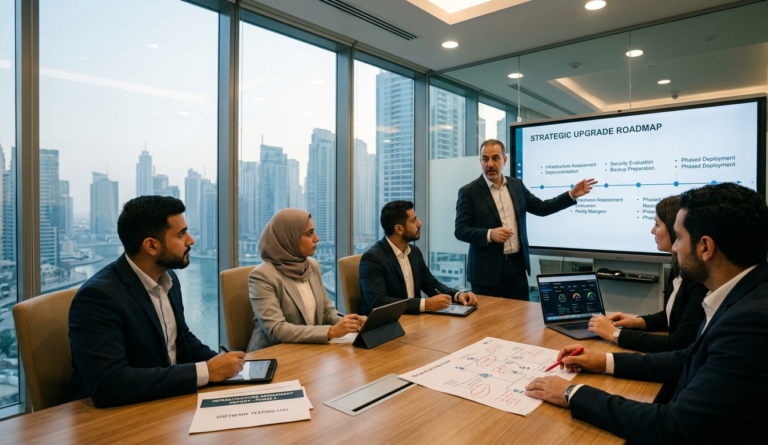
Strategic Upgrade Planning Matters
When operations grow tense, hasty choices often follow. Yet foresight changes outcomes. Guidance from seasoned tech advisors shapes clearer paths forward. Preparation becomes the anchor, not timing. Long-term clarity emerges when steps are mapped ahead of strain. Expert insight fits into gaps before they widen. Stability forms through deliberate design, not reaction.
Typically found within strategic upgrade planning are these elements:
- • Infrastructure assessment
- • Hardware compatibility review
- • Security evaluation
- • Software testing
- • Backup preparation
- • Phased deployment strategies
- • User transition support
During transitions, businesses experience fewer interruptions when backed by consistent technology assistance across Dubai. Cyber defenses remain stable even amid system changes due to steady oversight. Migration phases benefit from structured monitoring rather than reactive fixes. Resilience grows where support systems operate without delay. Stability emerges not from tools alone but through continuous maintenance routines.
A step-by-step approach prevents sudden system replacements caused by breakdowns or breaches. When updates are planned ahead, organizations avoid reactive fixes. Progress unfolds steadily instead of under pressure. Stability grows when changes come in sequence. Rushed actions become unnecessary through foresight.
The Role of IT Consulting in Long Term Stability
Most shifts in technology extend beyond just software. With each update, established work routines shift accordingly. Cybersecurity solutions Dubai adapts as well. Staff output often changes during these periods. Systems handling equipment require new approaches too. Long-term growth plans may need rethinking afterward.
Professional consulting services help organizations:
- • Identify upgrade risks early
- • Improve infrastructure efficiency
- • Reduce security exposure
- • Maintain operational continuity
- • Plan cost-effective transitions
- • Protect business data
- • Support future digital growth
With businesses relying more on cloud services, teamwork software, security protocols, and distant network entry points, consistent performance of operational settings grows essential. Though digital infrastructure expands, reliability takes greater weight. Because workflows shift online, steady system behavior matters more. Where technology supports daily tasks, balanced function gains priority. Despite scattered work models, smooth operation remains key. Since data flows through virtual channels, predictable setups prove valuable. Over time, as dependence deepens, stability becomes unavoidable.
Change might slow when extra help continues, yet lasting strength in operations comes from readiness – aligning technology with what lies ahead instead of holding to outdated setups. Future issues tend to stay smaller where updates begin early, guided by foresight more than urgency.
With operations needing steady support, firms now look closely at advice from IT Consultancy Dubai when handling updates to Windows systems. When cyber threats grow more complex, experienced insight becomes a priority for many organizations. Instead of rushing changes, careful planning guides their approach to upgrading technology frameworks. Over time, shifts toward full digital integration follow structured paths shaped by foresight. Long-term plans gain clarity through measured steps taken early.