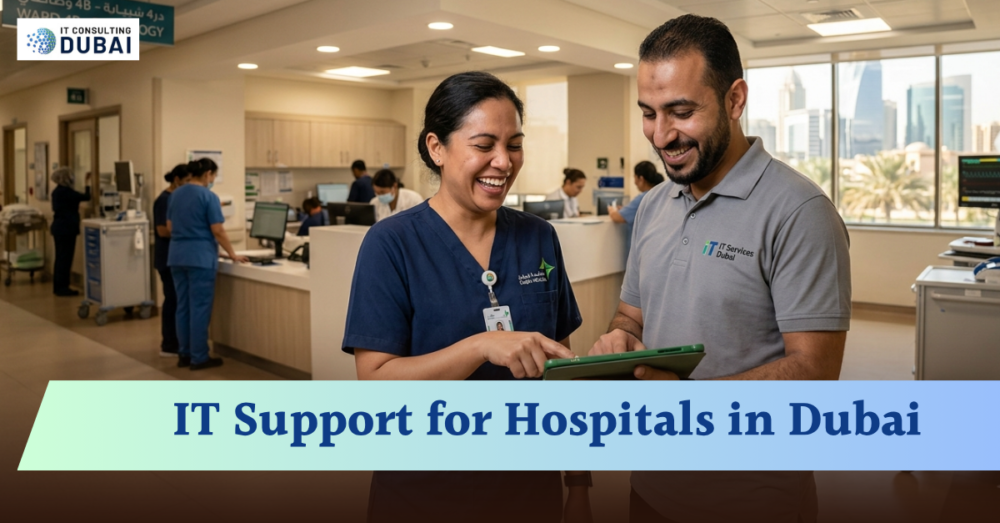
IT Support for Hospitals in Dubai
Seconds count within Dubai’s medical facilities, where operations thrive on constant data flow. When patients arrive, scans follow, tests proceed, results emerge – each phase depends on stable technology. Behind lab updates and medication tracking, seamless digital performance remains essential. Stability does not happen by chance; it emerges through structured IT support for hospitals in Dubai woven into daily functions. As reliance deepens, such oversight shifts from optional to central in hospital design.
Among these developments, firms offering IT Consulting Dubai shapes how technology serves healthcare providers. Where systems must adapt quickly, managed solutions maintain reliability through consistent oversight. Because uninterrupted access matters, networks are built to resist failure while expanding when needed. With stability as a focus, disruptions decline – supporting smoother operations across clinics, hospitals, and treatment facilities.
Managed IT Services in Dubai Healthcare
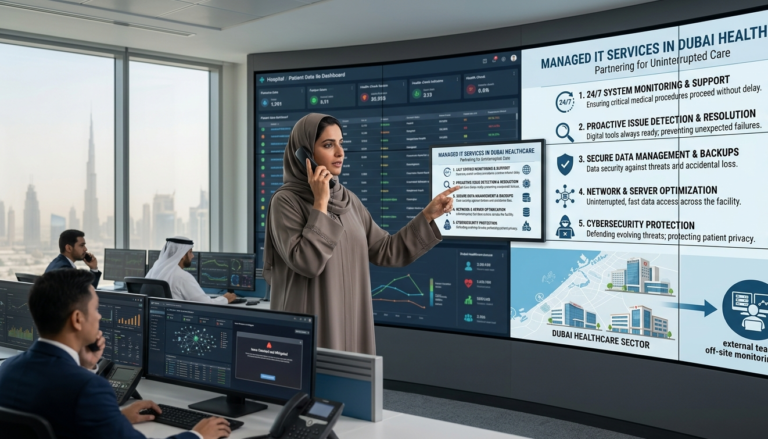
Within healthcare facilities, technology performance carries significant weight. A small system interruption might postpone medical procedures, affect urgent interventions, one moment at a time. Safety of individuals under care may falter when digital tools fail unexpectedly.
Managed IT services address these challenges by providing:
- • 24/7 system monitoring and support
- • Proactive issue detection and resolution
- • Secure data management and backups
- • Network and server optimization
- • Cybersecurity protection against evolving threats
Healthcare sector in Dubai often rely on external tech support to keep systems running without needing full internal teams. Such arrangements ease operational pressure through outsourced oversight aligned with local standards.
The Role of Managed IT Services in Hospital Server Rooms
A hospital server room forms the core of health information technology setups. Because it maintains vital operations like digital patient files, scanning equipment networks, medical test reporting tools.
Managed IT services ensure that these environments function smoothly through:
- • Continuous server monitoring
- • Hardware and software maintenance
- • Network performance optimization
- • Information preservation alongside emergency restoration mechanisms
- • Security patching and compliance updates
When management follows clear procedures, hospital operations stay stable because critical systems continue functioning without interruption.
Managed IT Services Key Parts for Healthcare
- Watch and fix things before they break
Proactive oversight begins well before problems arise, as monitored networks remain under constant observation. Early signs of trouble emerge through persistent tracking across system components. Detection happens ahead of disruption, thanks to steady surveillance embedded within operational layers.
This includes:
- • Server health tracking
- • Network traffic analysis
- • Application performance monitoring
- • Alert-based incident response
Because systems are monitored ahead of time, disruptions become less frequent. When issues arise, response happens before breakdowns affect care delivery.
- Cybersecurity and Data Protection
Because healthcare information demands careful handling, strong safeguards become necessary. Through managed IT support, multiple levels of defense activate – these combine encryption, access controls, monitoring systems. Protection improves when protocols adapt continuously, such setups respond before threats advance too far. Security strengthens not by single tools, but through coordinated layers working together.
- • Firewalls and intrusion detection systems
- • Endpoint protection for devices
- • Encryption of patient data
- • Secure access control policies
Security steps block ransomware attacks on medical centers. Phishing efforts meet resistance through updated safeguards. Unauthorized entry tries fail due to tighter controls.
- Cloud and hybrid infrastructure support
Today’s medical centers across Dubai rely more on cloud technology for greater reach and flexibility. With digital infrastructure, expansion becomes smoother while access improves noticeably. Instead of traditional setups, institutions choose remote platforms that adjust easily to demand. These shifts support operations without limiting future growth. Efficiency rises when data moves beyond physical boundaries.
IT Support Services
- • Cloud migration and integration
- • Hybrid IT environments
- • Remote access for medical professionals
- • Scalable storage solutions for growing patient data
Because it adapts easily, healthcare facilities can expand digital tools without replacing entire systems.
- Backup and disaster recovery planning
Unexpected failures challenge healthcare operations deeply, when information vanishes, consequences follow quickly, protection begins well before emergencies arise, solutions appear through carefully built protocols, continuity relies on tested backup structures, preparedness shows in moments nobody expects, systems respond faster when planning happens early.
- • Real-time data replication
- • Offsite backups
- • Disaster recovery data centers
- • Automated system restoration protocols
Even when failures occur without warning, these systems maintain consistent care delivery. Continuity remains intact through unforeseen disruptions because of their design. When something goes wrong suddenly, support does not stop, their structure allows operations to persist despite instability. Care continues smoothly although breakdowns happen now and then.
- Helpdesk and Technical Support
When problems occur in hospital systems, help must arrive without delay. Assistance comes through organizations that oversee technology operations.
- • 24/7 helpdesk assistance
- • At times, issues are resolved where they occur; otherwise, support happens from a distance
- • Fast resolution of system errors
- • End-user technical support
As a result, attention remains where it matters – on those receiving treatment, not on system failures.
IT Consulting Dubai matters in healthcare projects
Strategic planning often begins where routine operations leave off. Where one handles day-to-day tasks, another shapes direction through foresight. Success over time tends to follow when guidance leads implementation and direction matters most before action begins.
- Planning and designing infrastructure
Given hospital needs, consultants shape IT frameworks accordingly. Where demands exist, technology solutions follow a structured approach. Following assessments, system designs emerge with precision because workflows matter, digital tools align closely with operations. When challenges arise, planning ensures fit-for-purpose outcomes.
- • Patient volume and hospital size
- • Application workloads
- • Storage and data requirements
- • Future expansion needs
Because of this, systems support today’s needs along with what comes later. Infrastructure takes shape not only around now but also around what lies ahead.
- Meeting Rules and Standards
Fulfilling regulatory standards defines how health information systems operate within the UAE, compliance with national data safeguards shapes their design and function, where laws govern patient records, technology adapts without exception, rules around privacy steer every digital decision made, adherence is built into system requirements from the start, meeting legal expectations remains a constant priority, frameworks guide development to match policy demands.
IT Consulting Dubai ensures alignment with:
- • Healthcare data privacy standards
- • Cybersecurity frameworks
- • Operational compliance requirements
Healthcare organizations face fewer compliance issues as a result, legal exposure declines when procedures align with regulations, operational stability improves under consistent frameworks, risks diminish where oversight is structured, institutions function more securely within defined boundaries.
- System Integration and Optimization
Despite operating independently, hospital systems require smooth interaction. Yet integration remains a challenge across facilities. Where technology overlaps, coordination becomes essential. Without alignment, processes lose efficiency. Even minor disruptions affect overall function. Though designed separately, their joint operation is unavoidable.
Consultants help integrate:
- • Electronic Health Records
- • Laboratory systems
- • Radiology platforms
- • Pharmacy and billing systems
Efficiency within workflows increases when operations move without delay. Tasks moving forward see fewer disruptions.
- Scaling Up and Preparing Ahead
As healthcare technology advances, artificial intelligence finds growing use in digital diagnostic tools. Still, changes occur at a swift pace across medical systems worldwide.
IT consulting ensures infrastructure can support:
- • AI-powered diagnostic tools
- • Increased patient data volumes
- • Telemedicine platforms
- • Hybrid cloud environments
This method, built for what comes next, avoids expensive changes down the line.
Better Care Through Steady Tech Support
Hospitals in Dubai gain several advantages by adopting managed IT services:
- • Reduced system downtime
- • Improved patient data security
- • Faster access to medical records and diagnostics
- • Lower IT operational costs
- • Enhanced system reliability
- • Scalable digital infrastructure
Improved patient care emerges alongside more efficient hospital operations. Streamlined processes result in fewer delays across departments. Care delivery becomes consistent when systems function without interruption. Outcomes shift gradually under such conditions. Efficiency gains appear where resources are used wisely. Patient safety often rises as a consequence. Workflow stability supports long-term improvements. Consistency in execution makes differences over time.
Managed IT Services from IT Consulting
Healthcare IT systems reach their highest potential when planning meets precise implementation, where vision guides action and outcomes improve without reliance on trends. Success emerges not from tools alone, but through consistent alignment of goals and tasks, allowing progress to follow clarity across complex digital infrastructures. Long-term effectiveness grows where decisions reflect both insight and discipline, which is why architecture and future direction are shaped by IT Consulting Dubai through deliberate design choices and structured long-range planning.
As strategy unfolds through clearly defined infrastructure, vision gradually becomes framework when expertise leads the way. At the same time, systems are implemented, monitored, and maintained through managed IT services, where structured oversight supports continuous functionality and operational stability. Maintenance follows established protocols while regular evaluation keeps performance consistent under changing demands.
Operating together as one integrated system, these services keep hospitals functioning without interruption, with security built into every layer and preparedness woven throughout the infrastructure so stability remains constant even under pressure
Building Resilient Healthcare IT Systems in Dubai
With progress in Dubai’s health services, reliable technology frameworks gain greater significance. When hospitals operate, their reliance on consistent digital performance ensures patient safety, precision, correct timing. A steady flow of data supports medical decisions without disruption. Systems must remain active, avoiding gaps that could affect outcomes. Through constant connectivity, clinics maintain standards expected today. Technology stability shapes how well treatments are given. Without interruptions, operations align more closely with intended results.
Operational stability emerges through managed IT services in Dubai, where consistent oversight strengthens defenses while maintaining performance. Alongside this, IT Consulting Dubai shapes technology planning in Dubai – strategy gains form when long-term readiness guides infrastructure choices.
Operating smoothly under pressure, this pairing support hospital performance without compromising care quality. Efficiency emerges where demand is greatest, guided by consistent clinical priorities. Their joint function reflects stability amid complexity, shaping outcomes through steady integration.